

Dry Red Chilies
Dry Red Chilies
At SMU EXIM, we offer premium-quality chillies sourced from reliable Indian farms and processed to meet international export standards. Chilli is the dried, ripe fruit of the Capsicum genus, valued worldwide for its heat, color, and bold flavor. The widely cultivated Capsicum annuum produces popular varieties such as red chilli, cayenne, paprika, and sweet bell peppers, ranging from mild to moderately spicy.
Another important variety, Capsicum frutescens, is a perennial chilli known for its small, highly pungent pods. Commonly called Bird Chilli or Tabasco Chilli, it is prized for its intense heat and is widely used in sauces, spice blends, and traditional cuisines. SMU EXIM ensures consistent quality, freshness, and purity in every export shipment.
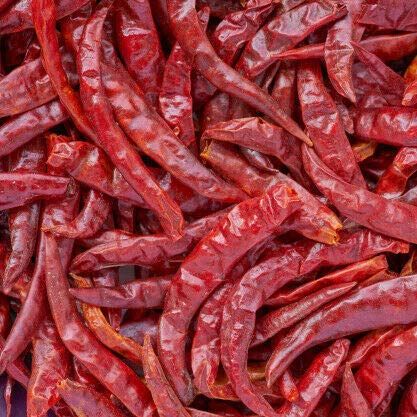
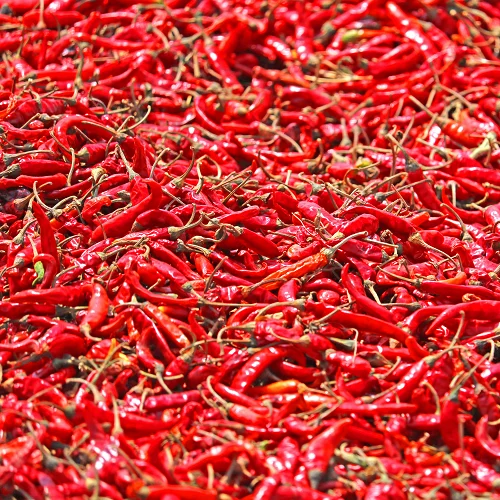
Different Varieties of Chili
Birds Eye Chili(Dhani) : This is grown in the North East and is tiny but packs a punch in terms of spice. It is used not only in cooking but also used in chutneys and pickles. When eating a pickle made of these chillis, it is best to literally take half a teaspoon on your plate to begin with and to savour it by eating tiny portions of this quantity.
- Grown in Mizoram & some areas of Manipur
- Blood red in colour,highly pungent
- Harvesting season-October to December
- ASTA colour value-41.7
- Capsaicine-0.589%
Byadagi(kaddi) :
This chilli is grown in Karnataka. It is is long and has a thin skin, and when it’s dried has a crinkly appearance. It is known for its colour and pungency and is consumed across India. The ByadagiChilli is similar to Paprika.
- Grown in Dharwar Karnataka
- Red in colour with less pungency or without pungency
- Harvesting season-January to May
- Annual Production-21,000 tonnes
- ASTA colour value-159.9
- Capsaicine-Negligible
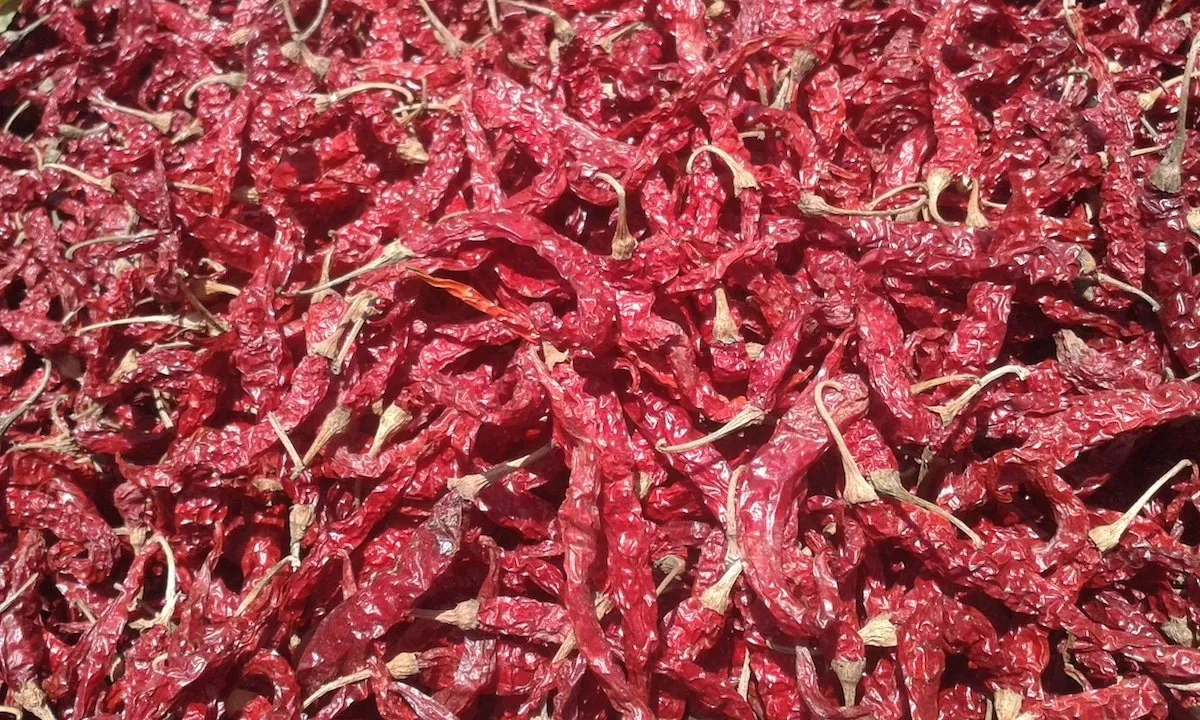
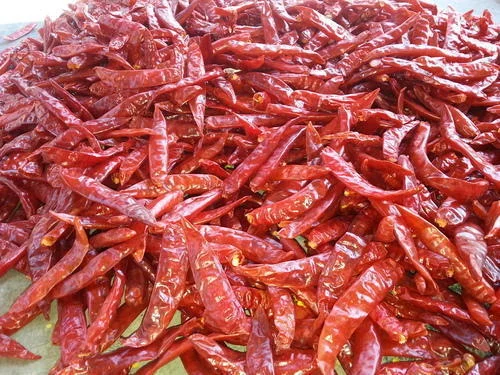
Ellachipur Sannam-S4 TYPE
- Grown in Amaravathi District of Maharashtra
- Reddish in colour and very hot
- Annual Production – 1800 tonnes
- Harvesting season-September to December
- ASTA colour value – 70.40
- Capsaicine-0.2%
Guntur Sannam-S4 TYPE
Andhra cuisine is famous for its extremely spicy dishes and the chilli responsible for this is the Guntur Sannam – S4. The Sannamchilli has many varieties that are grown not only in Andhra but also in states such as Madhya Pradesh. Known for its heat, unless one is used to such a high level of spiciness, you will find many people in tears when eating delicious Andhra dishes. As the name suggests, it’s grown extensively in this region. This chilli has become so popular; it is exported to all over the world. It accounts for roughly 30% of India’s chilli exports.
- Grown in Guntur,Warangal,Khammam Districts of Andhra Pradesh
- Skin thick,hot and red
- Harvesting season – December to May
- Annual Production – 2,80,000 tonnes
- ASTA colour value- 32.11
- Capsaicine-0.226%
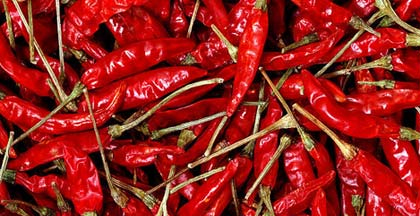
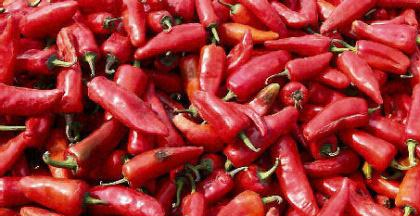
Hindpur-S7
- Grown in Hindpur in Andhra Pradesh
- Red in colour,hot and highly pungent
- Harvesting season- December to March
- Capsaicine-0.24
- ASTA colour value- 33.00
Jwala
Grown primarily in Gujarat, this chilli is grown all over the country and is used widely in India for cooking. Though its green initially, once it matures it turns red in colour. They can even be grown at home. It is one of the country’s most important crops.
- Grown in Kheda, Mehsana& in South Gujarat
- Highly pungent, light red in colour,short and the seeds are compact
- Harvesting season-September to December
- Capsaicine-0.4%
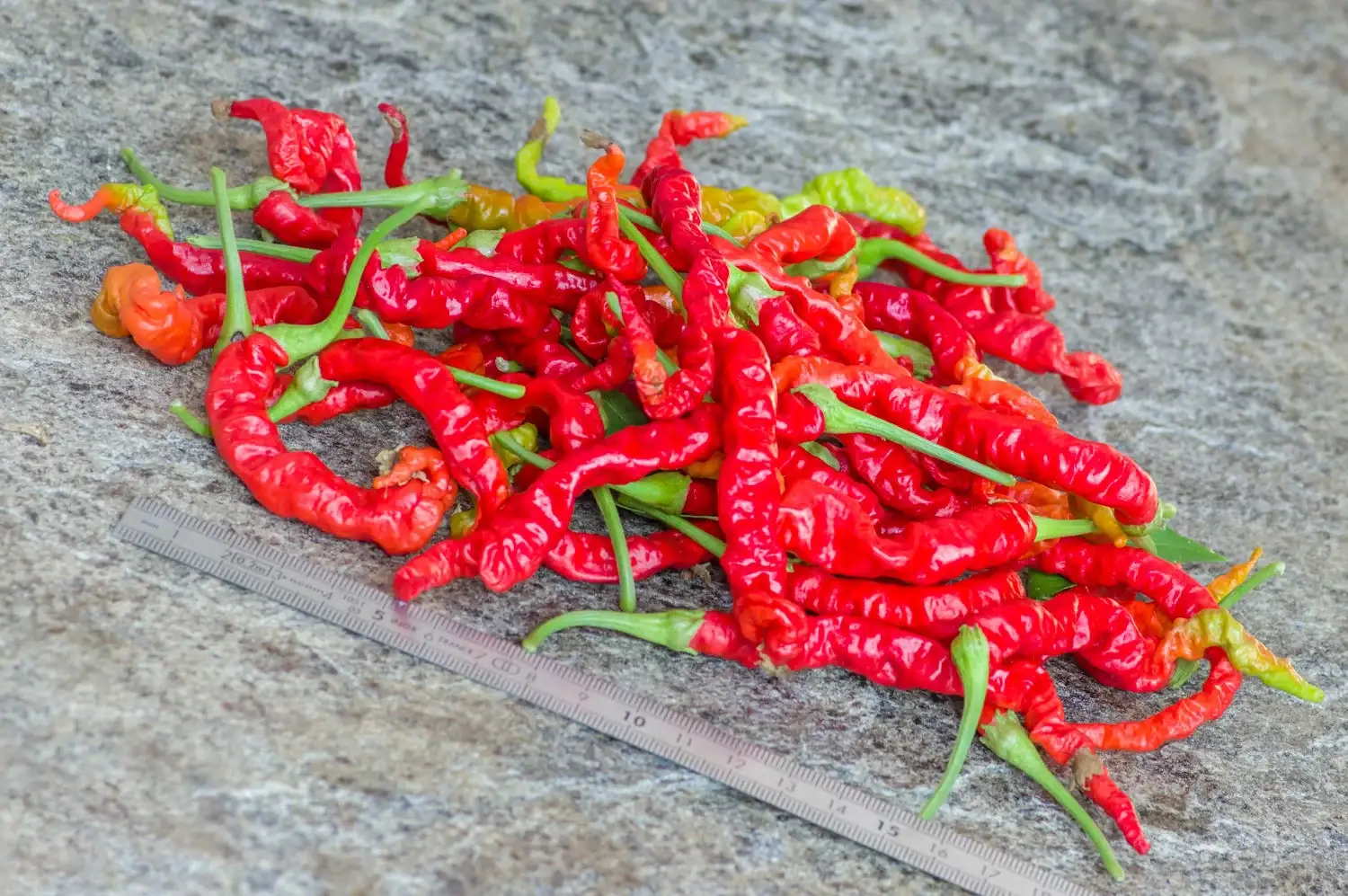
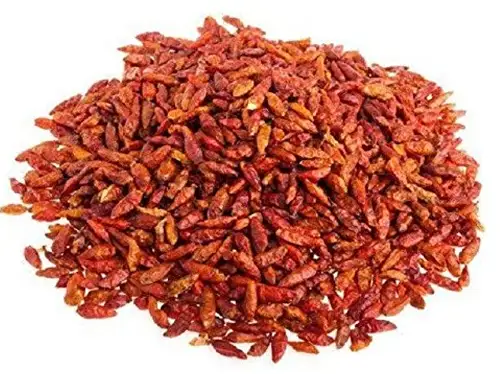
Kanthari
These chillies are grown in Kerala and become white when mature. These chillis are hot and lend a good flavor to dishes. Kantharichillies are a unique variety of Bird’s Eye Chilli. It is a perennial crop.
- Grown in Kerala & some parts of Tamil Nadu
- Short and ivory white in colour with high pungency
- Mainly grown as a homestead crop
- Available in the markets throughout the year
- ASTA colour value- 2.96
- Capsaicine-0.504%
Kashmir Chili
Known more for its colour than its spice, this chilli is ground into a powder and used not only in Kashmiri dishes but in many dishes across the country and the world to add a beautiful red colour to the dish as well as enhance the dish’s taste. It’s so mild in its spiciness that it measures barely 2000 SHU (Scoville Heat Units). The Scoville Heat Scale measures the spiciness or the hotness of a chilli. The highest is Pure Capsaicin and Dihydrocapsaicin which measures 16,000,000 SHU. Now you can understand exactly how mild the Kashmiri Chilli is!!
- Grown in temperate regions such as Himachal Pradesh,Jammu& Kashmir and also in sub-tropical regions of North India during winter season
- Long,fleshy,deep red in colour
- Harvesting season- November to February
- ASTA colour value- 54.10
- Capsaicine-0.325%
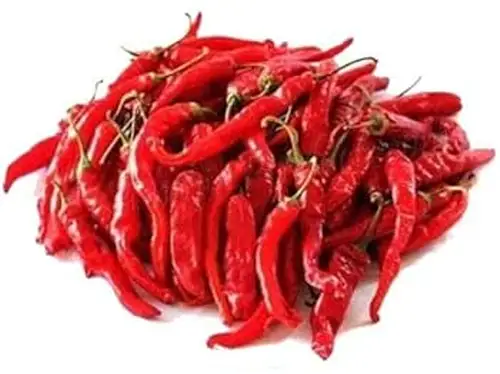
Madhya Pradesh G.T.Sannam
- Grown in Indore, MalkapurChikli and Elachpur areas of Madhya Pradesh
- Red in colour and pungent
- Harvesting season-January to March
- Annual Production – 7500 tonnes
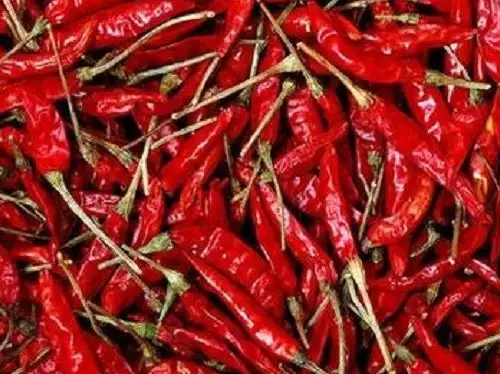
Common Packing For Container Shipment
| Products | Packing | Container |
|---|---|---|
| Red Chili | 20kg/50kg/60kg/100kg/120kg/pressed bags, 15kg/carton, also can packing as your requirements. | Loaded in 20’FCL or 40’FCL |
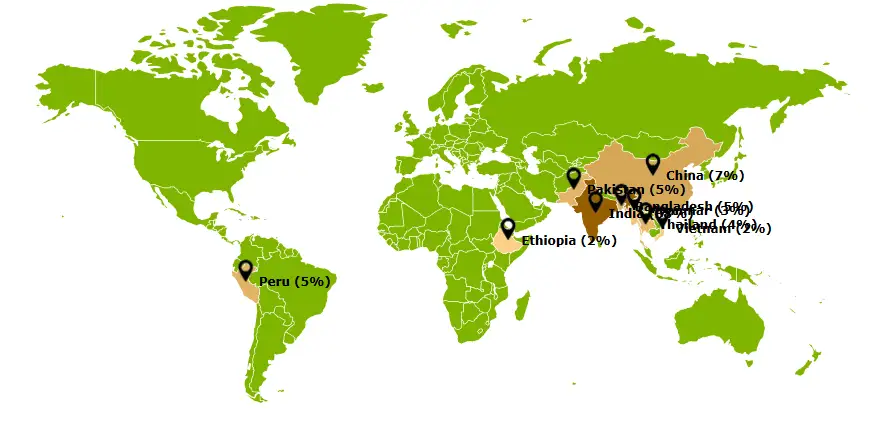
Origin of Red Chili with production
General Specification
| Properties | Values / Limits |
|---|---|
| Length | 12-17 cm up |
| Moisture | Max. 12% |
| Foreign Matter | Max. 2% |
| Broken Chili | Max. 5% |
| Type | With & Without Stem |
| Hot Value | 0.200 S.H.U |
| Wash | Dry Wash or Water Washed by Machine |
| Yellow Spot | Max. 2% |
| Total Ash | Max. 8% |
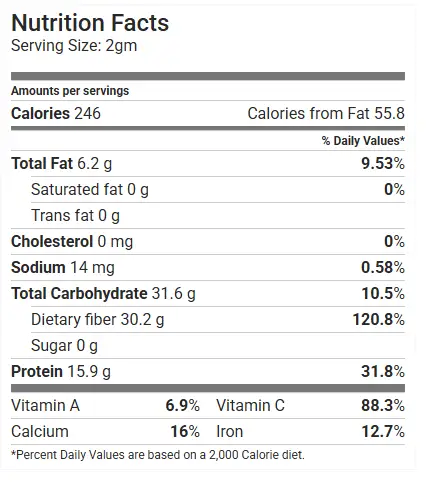
Facts on Dry Red Chilies
Health benefits of chili peppers
- Chili pepper contains an impressive list of plant derived chemical compounds that are known to have disease preventing and health promoting properties.
- Chilies contain health benefiting an alkaloid compound, capsaicin, which gives them strong spicy, pungent character. Early laboratory studies on experimental mammals suggest that capsaicin has anti-bacterial, anti-carcinogenic, analgesic and anti-diabetic properties. It also found to reduce LDL cholesterol levels in obese.
- Fresh chili peppers, red and green, are a rich source of vitamin-C. 100 g fresh chilies provide about 143.7 µg or about 240% of RDA. Vitamin-C is a potent water-soluble antioxidant. It is essential for the collagen synthesis inside the human body. Collagen is one of the main structural protein required for maintaining the integrity of blood vessels, skin, organs, and bones. Regular consumption of foods rich in vitamin-C helps protect from scurvy, develop resistance against infectious agents (boosts immunity), and scavenge harmful, pro-inflammatory free radicals from the body.
- They are also good in other antioxidants such as vitamin-A, and flavonoids like ß-carotene, α -carotene, lutein, zeaxanthin, and cryptoxanthin. These antioxidant substances in capsicum help protect the body from injurious effects of free radicals generated during stress, diseases conditions.
- Chilies carry a good amount of minerals like potassium, manganese, iron, and magnesium. Potassium is an important component of cell and body fluids that helps controlling heart rate and blood pressure. The human body use manganese as a co-factor for the antioxidant enzyme, superoxide dismutase.
- Chilies are also good in the B-complex group of vitamins such as niacin, pyridoxine (vitamin B-6), riboflavin and thiamin (vitamin B-1). These vitamins are essential in the sense that human body requires them from external sources to replenish.
Enquiry Now